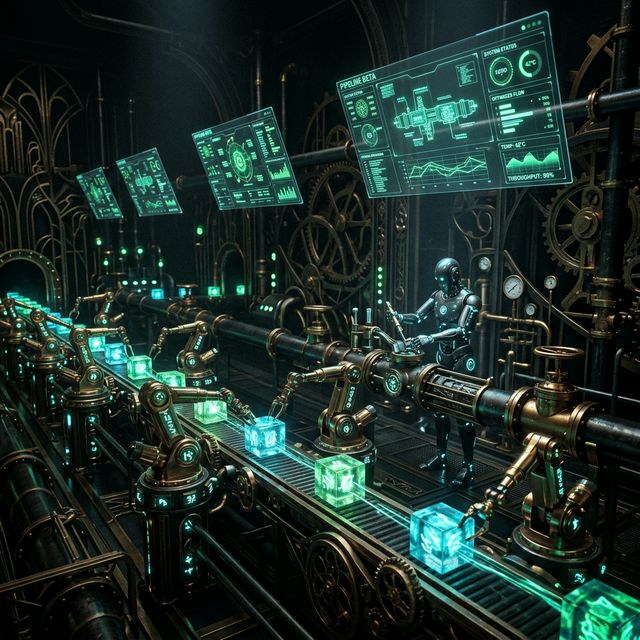
Running a creative platform with a team of one means automation isn’t optional. HobBot is the system that handles everything I’d rather not do manually: content scheduling, pipeline monitoring, status checks, and the tedious glue work between services.
What HobBot Actually Does
HobBot is a collection of Cloudflare Workers that run on schedules and respond to events. It’s not a single monolithic bot; it’s a set of purpose-built automations that each handle one job well.
Content pipeline: when new gallery entries, blog posts, or grimoire articles are ready, HobBot handles the publishing workflow. Format validation, image optimization, metadata checks, and deployment triggers. The goal is that I write the content and HobBot handles everything between “done writing” and “live on the site.”
Status monitoring: HobBot polls service health endpoints and updates the status page. If StyleFusion’s generation queue backs up, or a Cloudflare Worker starts throwing errors, the status page reflects it within minutes rather than whenever I happen to notice.
Data maintenance: the Grimoire knowledge graph needs periodic maintenance. Atom relationships need reweighting based on usage patterns, stale entries need flagging, and cross-references need updating. HobBot runs these maintenance jobs on a schedule.
Why Not Just Use a CMS
Traditional CMS platforms solve content management by giving you a dashboard full of buttons. That works if you have a content team. When it’s just you and you’d rather be building creative tools, every minute spent in an admin panel is a minute not spent on the actual product.
HobBot inverts the model. Instead of a dashboard that waits for me to push buttons, it’s a pipeline that acts on triggers. Content goes in one end, published pages come out the other. I focus on the content; HobBot focuses on the logistics.
The Architecture
Each HobBot worker follows the same pattern:
- Trigger: cron schedule or webhook event
- Validate: check that inputs are well-formed and complete
- Transform: do whatever processing the job requires
- Deliver: write output to the appropriate destination (D1, R2, or trigger a build)
- Report: log what happened, flag anything unusual
This maps directly to HobFarm’s Fractal Fusion Engine pattern (INGEST, INDEX, MEDIATE, EXECUTE, VALIDATE, DELIVER), just applied to content operations instead of image generation.
What’s Next
HobBot is getting smarter. The next phase adds AI-assisted content generation: drafting blog posts from outlines, generating social media variants from long-form content, and suggesting grimoire entries based on gaps in the knowledge graph. The skeleton is there; the intelligence layer is what I’m building now.