· 5 min read
How Psychedelia Went Beige
cultural-thread

What psychedelic goth actually is, where its look comes from, and the rules used to build it.
A few years ago someone asked r/goth a simple question: is psychedelic goth a thing? Thirty-seven people answered. Every single answer was a band name. Siouxsie. Fields of the Nephilim. The Legendary Pink Dots. Red Temple Spirits. Not one person posted a picture, named a visual artist, or described what the style looks like. The thread reached its own verdict: it’s not an established genre, and if it’s not, make it a thing.
This page makes it a thing.
Goth has carried a psychedelic undercurrent since the start. In 1983, Robert Smith and Steven Severin recorded their only album together as The Glove and named it Blue Sunshine, after a 1977 horror film about acid casualties whose trips return a decade later as murder sprees. In 1989 The Cure built Disintegration on slow phased swirl. In 1990 Fields of the Nephilim made Elizium with Andy Jackson, the engineer behind Pink Floyd’s records, and fans have called it goth Pink Floyd ever since. Red Temple Spirits were dancing to restore an eclipsed moon in 1988. The crossover has been audible for four decades.
Search for it visually and you get a void. Band photos, album sleeves, and tie-dye skulls. The genre has a discography and no picture book.
When I say psychedelic goth, people hear LSD. But the word arrived long after the look. The kind of images we now call psychedelic (impossible space, recursion, melting logic, kaleidoscope bodies) were fully formed before the chemistry had a name, and they surfaced everywhere at once:
Georges Méliès was splicing heads off bodies and putting a rocket in the moon’s eye between 1896 and 1912, working from stage magic, not pharmacology. Giorgio de Chirico painted empty plazas with wrong shadows and wrong vanishing points through the 1910s and called it metaphysical art. Dada detonated logic at the Cabaret Voltaire in 1916. The Surrealist Manifesto landed in 1924, Un Chien Andalou sliced an eyeball in 1929, Magritte broke object logic, Dali melted the clocks in 1931. And in 1933 and 1934, Busby Berkeley choreographed human kaleidoscopes for Depression-era escapism: the waterfall formations of Footlight Parade, the floating disembodied faces of Dames.
Then in 1956 a psychiatrist named Humphry Osmond coined “psychedelic” in a letter to Aldous Huxley, and the new word took credit for images that filmmakers, painters, and choreographers had been building since before the First World War. The drugs didn’t invent the visuals. They borrowed them.
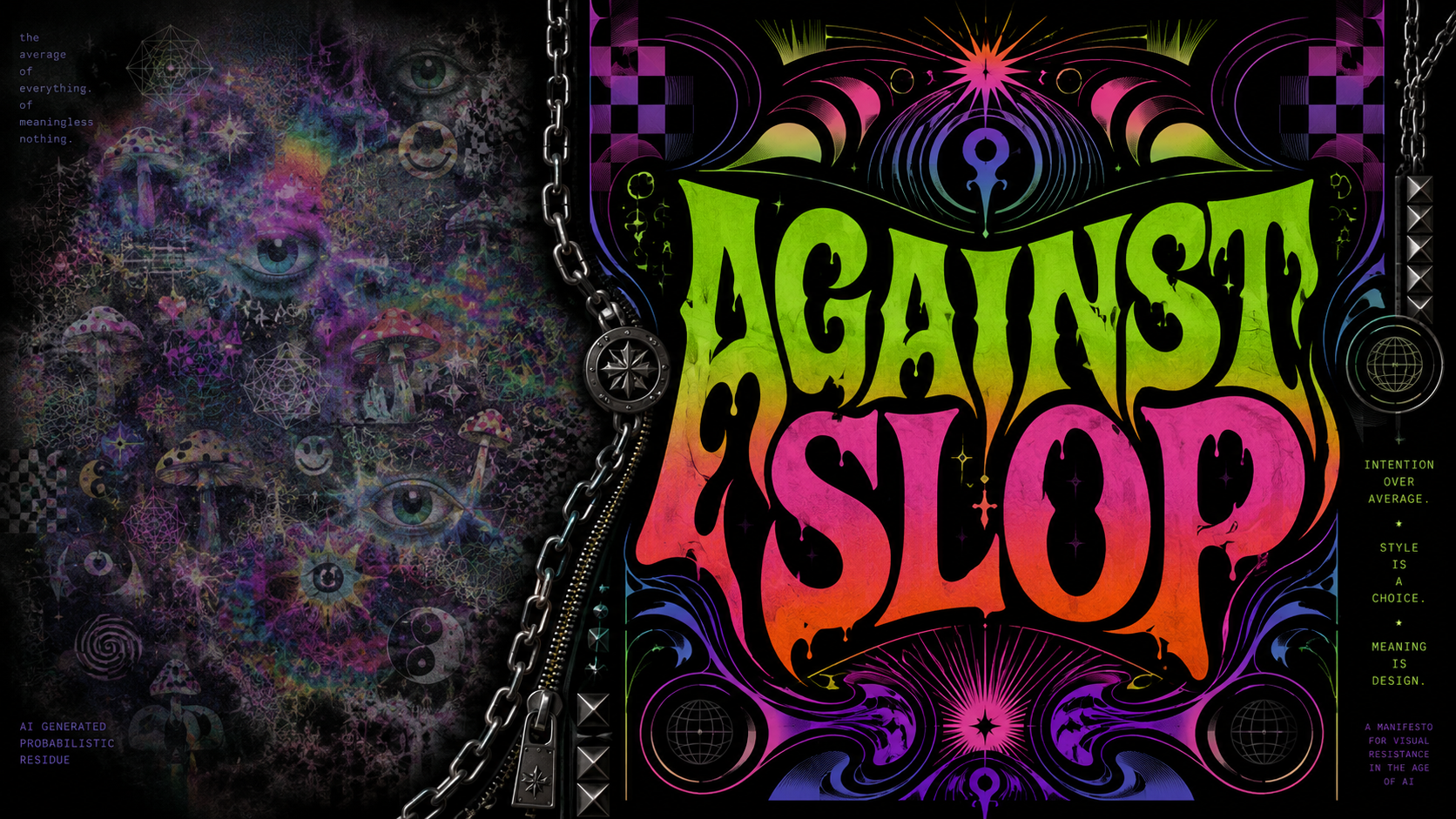
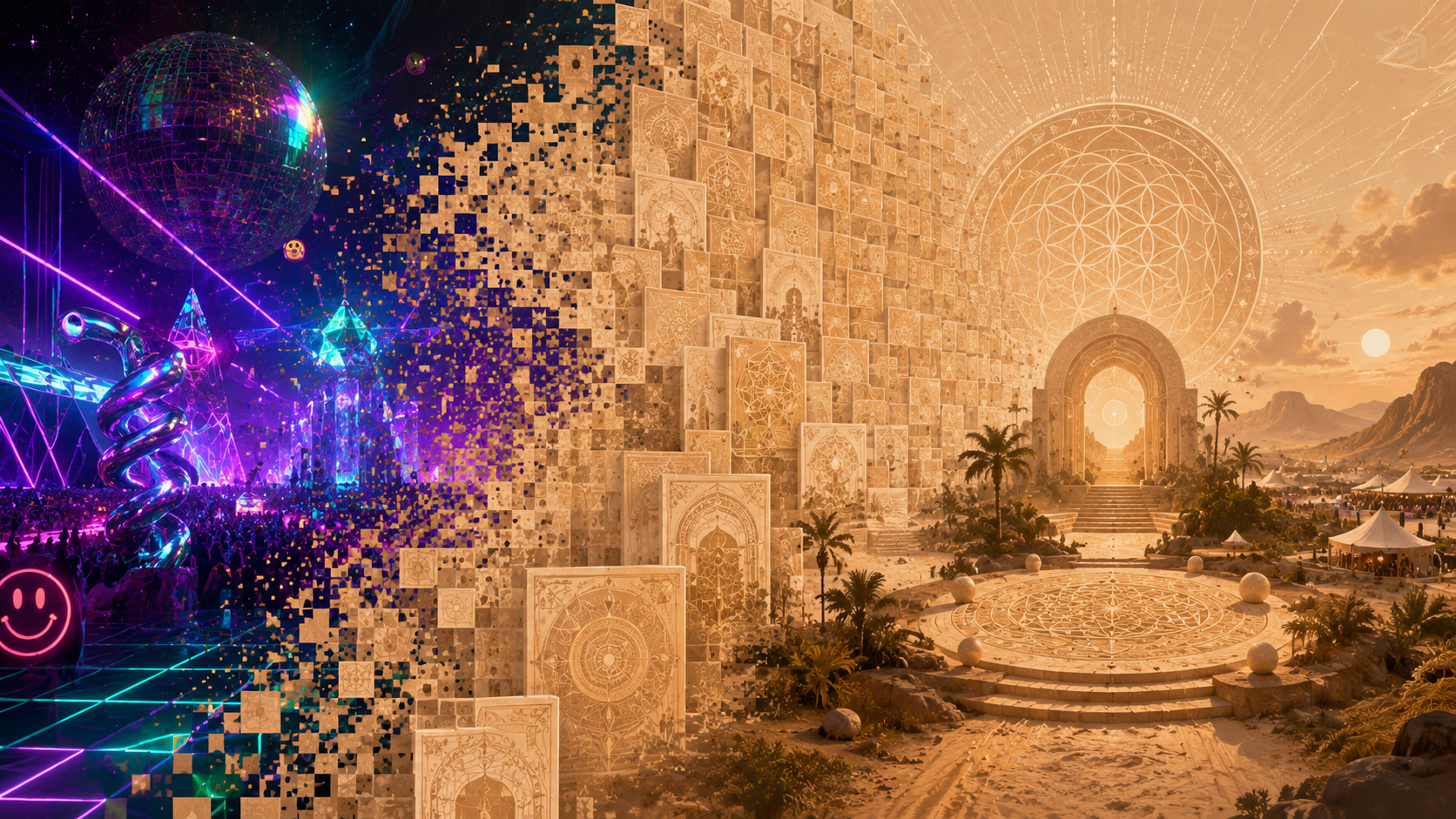
Somewhere in the 2010s, psychedelic imagery online collapsed into wellness decor. Earth tones. Mandala posters. Sacred geometry rendered in beige, hung in a room where a retreat is about to happen. That lane can exist, but it abandoned both halves of what makes it work: the darkness, and the discipline.
Goth never lost either one. Goth is a palette discipline (black as the ground state, color as a controlled detonation) and an iconography (the romantic macabre, the haunted, the ornamental). It was holding exactly what psychedelia threw away.
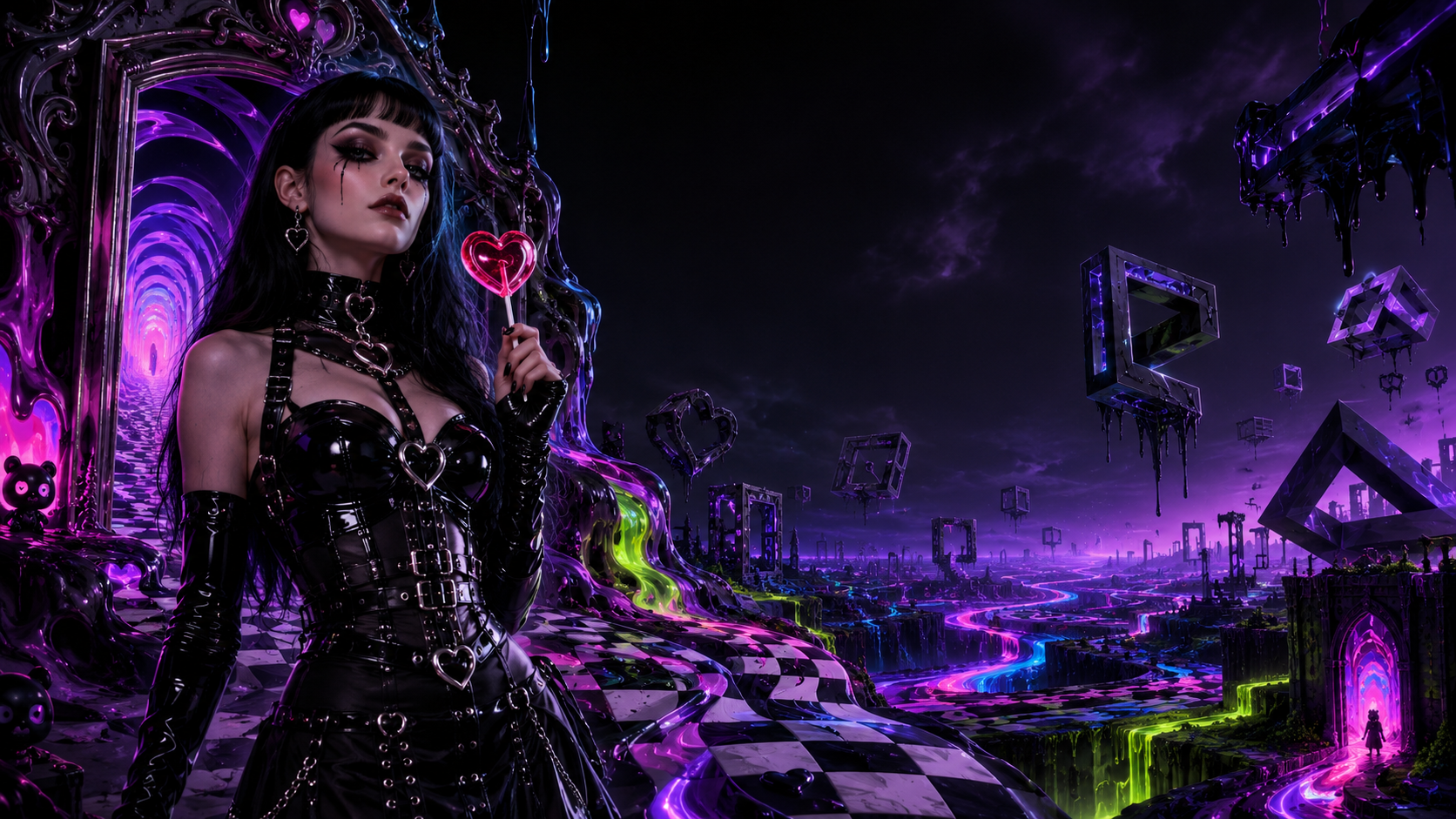
Psychedelic goth takes everything goth already does well, the dark imagery and the strict hand with color, and drops it into the warped space of altered perception. Hyperspace geometry instead of mandalas. Toxic color instead of earth tones. Vinyl, hardware, and mascara drip instead of festival wear. Light that comes from inside things, because there is no sun here.
The rules I build with:
The galleries are organized by motif, so you can follow a single object (start with the heart-shaped lollipop) across characters, worlds, and styles. New work posts daily.